
Which multisig wallet is suitable for you?
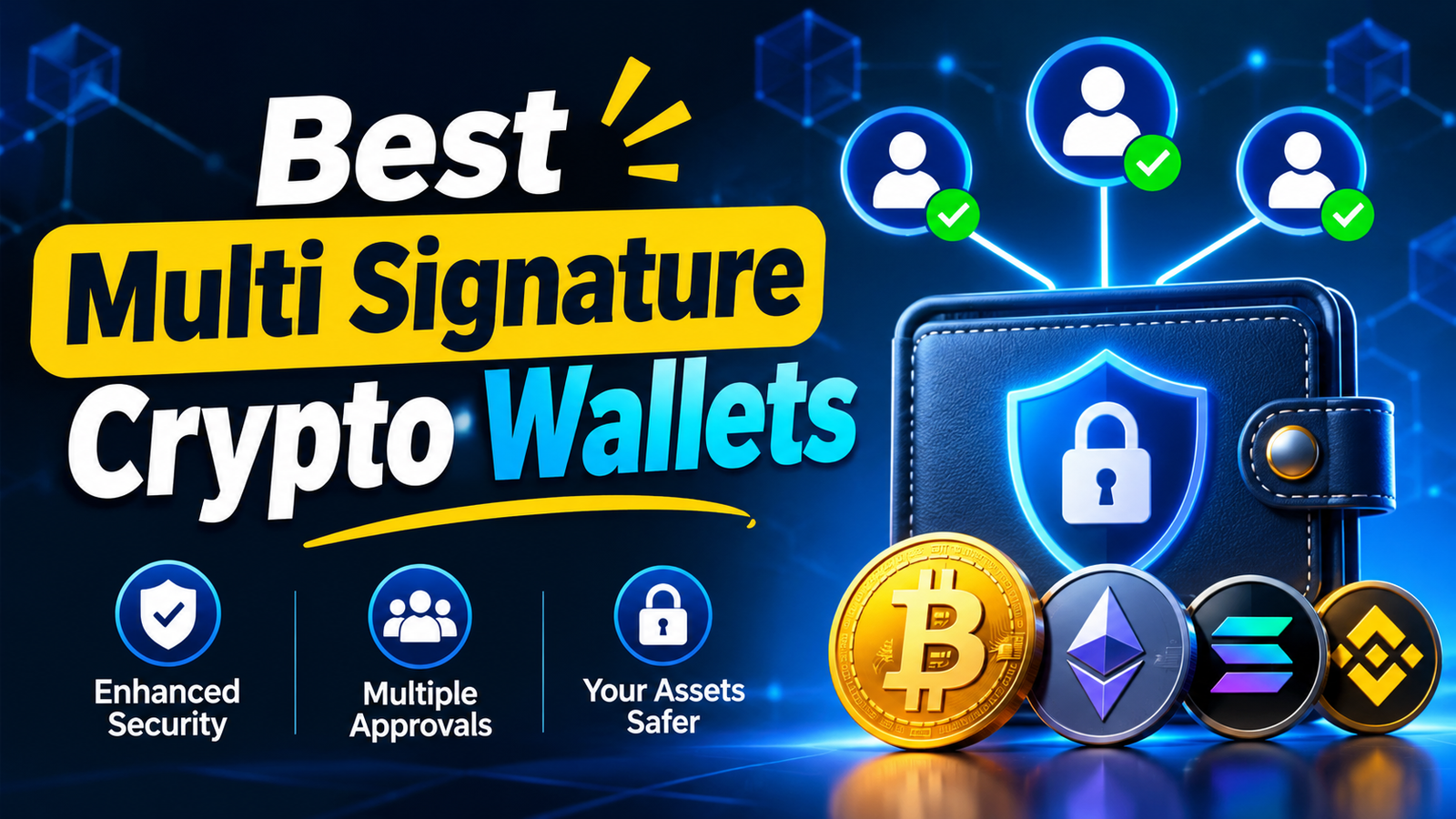
To approve a transaction, a multi-sig wallet requires more than one private key. A guided 2-of-3 service like Casa or Unchained is the simplest way for most Bitcoin proprietors in the U.S. to begin. For hands-on users, they tend to choose Sparrow or Nunchuck, while the Ethereum users choose Safe.
All the top multi signature cryptocurrency wallets have a common objective. They eliminate the single point of failure that a single seed phrase has. In the event one key is lost or stolen, your money remains safe and can be recovered.
The more balances increase, the more this protection is important. One seed phrase on one device is easy, one wrong move can destroy years of savings. Crypto also does not come with FDIC insurance, and all banks cannot reverse a bad transfer.
This guide will help you understand how to use and the best multisig solutions. It also covers a potential setup, the fundamentals of taxes in the United States, common pitfalls, and popular questions. It’s educational information, not individualized financial, legal or tax advice.
What does a multisig wallet include?
Multi-signed (or multi-signature) wallets are cryptocurrencies that need multiple private keys to approve a transaction. In a 2-of-3 system, three keys are the keys exist, and only two are needed to sign funds to move.
Imagine a safe-deposit box with two- or three-key combinations. It can’t be opened by just one person. One key is not enough to lock you out.
There are several differences between a standard wallet and this. It uses one key, usually backed up as a 12- or 24-word seed phrase. Anyone who obtains that phrase controls the money.
Features of Single-signature wallets and multisig wallets
| Feature | Single – Signature Wallet | Multisig Wallet (2 – of 3 ) |
| Keys needed to spend
Single point of failure |
One
Single point of failure |
Two of three
No |
| Setup effort | Low | Moderate to high |
| If one key is lost | Funds are often gone | Remaining keys can recover funds |
| Typical cost | Free app or one device | Several devices or a subscription |
How does a multisig wallet work?
Multisig wallet: It is a wallet that uses multiple public keys to create a single shared address. Matching of a certain number of signatures is required. The standard transaction of Bitcoin seems to be as follows:
- Create the keys. The keys are created individually, typically on a hardware wallet produced by Trezor, Ledger, Coldcard or another manufacturer.
- Build the wallet. A coordinator app bundles up the public keys into one address. It will also create a wallet configuration file.
- Receive funds. As with any other address, you send crypto to the multisig address.
- Propose a spend. The co-ordinator prepares a transaction. In Bitcoin it is known as a partially signed Bitcoin transaction (PSBT).
- Collect signatures. Each signature is done on a separate device until the number of signatures required is obtained.
- Broadcast. When there are sufficient signatures, the transaction is submitted to the network.
Ethereum operates in a slightly different manner. Wallets such as Safe use a smart contract to enforce the signing rules. However, the protocol’s scripts include the implementation of Bitcoin multisig. Smart contracts make things more flexible but introduce software risk as well.
There are three types of multisig models
- Do it yourself (DIY). You have all of the keys and use free wallets like Electrum or Sparrow. You have 100% control and responsibility.
- Collaborative custody. Most keys are in your possession and one of the provider’s. This is the model that is used by Casa and Unchained. The provider’s key cannot transfer funds without the assistance of another key.
- Institutional custody. A provider is a person who acts as a manager of keys and approval policies in the context of a business. Fund movement may be dependent upon cooperation of the provider, depending on the set-up.
What is the importance of multisig?
Multisig is important because if there are any mistakes, they are most likely permanent. Typically, crypto transfers are non-refundable. If this seed phrase is lost, misplaced or destroyed by fire, there is a complete loss.
Multisig decreases a number of risks simultaneously:
- Theft. The attacker would have to get into several devices at various locations.
- Loss. The remaining keys can be recovered to get back to normal.
- Pressure and fraud. An additional approver reduces hasty or forced transferring.
- Inheritance. If you have trusted people or services with spreading the keys, the heirs can access the money.
- Team control. Two officers can be required by the business to approve expenditure.
The concept is similar to that of the dual controls banks currently implement, for U.S. households. Multisig is used for simple internal controls and an approval flow for small businesses and nonprofits that have cryptocurrency.
Multisig isn’t a shield against price drops or poor investments. It does not protect access to your assets, it does not do more.
Some of the major considerations prior to your selection
When selecting the best multi signature crypto wallets, a few fundamental questions need to be asked. It’s not about your answers, it’s about how important they are.
- Which Blockchain are you invested in? Some tools are available for only Bitcoin. Otherwise, there are people who support Ethereum and similar networks, and a handful of folks who support Solana.
- How many keys will you be playing? With a DIY setup, you’ve got them all. With collective services, the one remains with the provider.
- Can you go somewhere without anyone with you? Check for open standards and a published recovery tool to be able to rebuild the wallet with other software.
- What is the list of supported wallets? Ensure compatibility with existing or future devices.
- How much does it cost? Include subscriptions, hardware costs, trading costs and network costs.
- How much assistance do you require? Onboarding is an expensive endeavor. Doing it yourself will take longer and be more prone to errors.
- What are the inheritance arrangements? Your family should be able to get back the money without having to guess.
The best multisig wallets available
The table below highlights some of the more popular options, in accordance with information provided by the public providers at the time of writing. The features and prices may change, please check on each official websites. This list is not a ranking or endorsement.
| Wallet | Best for | Networks | Custody Model | Cost ( verify model ) |
| Casa | Guided self-custody | Bitcoin, Ethereum, stablecoins | Collaborative; Casa holds one key | Standard $250/yr; Premium $2,100/yr on its pricing page |
| Unchained | Bitcoin vaults, IRAs, loans | Bitcoin | Collaborative 2-of-3; you hold two keys | Varies by service; check its site |
| Sparrow | DIY desktop control | Bitcoin | DIY | Free software plus hardware cost |
| Nunchuk | Mobile and desktop flexibility | Bitcoin | DIY, with optional services | Free tier supports DIY multisig |
| Electrum | Experienced Bitcoin users | Bitcoin | DIY | Free software plus hardware cost |
| Safe | DAOs, businesses, EVM users | Ethereum and EVM chains | Smart-contract multisig | Free app; network gas fees apply |
| BitGo | Institutions and treasuries | Multiple assets | Institutional | Contact provider |
Casa
Casa is a mobile-first service, that makes multisig approachable. It has a built-in inheritance tool and a three-key vault in its Standard plan. Premium: 5 key vault with hardware. Consequently, Casa has a sovereign recovery tool that allows you to restore your vault without Casa’s involvement. Fees for trading and bank transfer will be charged on top of subscription.
Unchained
Unchained is about Bitcoin and is a 2-of-3 scheme. Since you do not have to be present together, you can sign without the company of the other key. It’s also a Bitcoin IRA, trading desk, and bitcoin-backed loans, catering to the investors who prefer to have multiple services in one place.
Sparrow, Nunchuk, and Electrum
These three cater for those who wish control and are willing to learn. Sparrow is a popular desktop hardware wallet multisig coordinators application. The nunchuck adds to this mobile support and flexible key setups. For experienced users, there’s a long-established and venerable alternative: Electrum. You have to take responsibility for backup, and no one can assist if you lose it all.
Safe
Safe, formerly known as Gnosis Safe, is a smart-contract wallet, adopted by DAOs, crypto-native companies, and Ethereum power users. Teams are able to establish the approval criteria and adjust the signers. Double check the address of the official app as fake interfaces are a common ploy used in phishing attacks.
BitGo
BitGo provides policy controls and compliance support to businesses, funds and other institutions. Usually, the price is negotiated and it’s not the same as consumer wallets. This level is rarely required by individuals.
Which of these options is appropriate for which reader?
New BTC owner looking for advice: Casa or Unchained.
Technical user who prefers to have control: Sparrow, Nunchuk, Electrum (using hardware wallet).
Ethereum or DAO treasury: Safe.
Corporate or fund treasury: after legal and compliance review, an institutional provider.
Advantages and possible disadvantages
Multisig has its benefits of security but not without risk. Consider the pros and cons of transferring large sums of money.
Benefits
No single point of failure. No key is enough to empty the wallet.
- Shared control. Families and groups can divide power.
- Better recovery options. The other keys may be able to reconstruct access.
- Transparent governance. The wallet is what enforces approval rules, not by trust.
- Reduced exchange risk. Money is not on a platform’s balance sheet, it is under your control.
Risks and trade-offs
- Complexity. The more devices and steps there are, the more likely there are to be errors.
- Lost setup data. Some multisig wallets require the wallet configuration file or the public keys to be rebuilt. Keep copies.
- Provider dependence. The collaborative services do best when the company remains in business. Test Recovery.
- Smart-contract risk. Wallets that are based on contracts like Safe may be at risk of bugs or malicious signing requests.
- Higher costs. Everything that is not included in the base subscription and hardware comes at an extra cost. Bitcoin multisig transactions are also bigger, which will mean that they have higher network fees.
- Privacy. It’s easier to spot on-chain multisig spending patterns. No coverage as a rule. Self-custodial cryptos are not insured by the FDIC or SIPC.
- Renewals. Annual plans are subject to re-enrollment, so please review billing terms.
Multi-sig wallets are safe against key loss and theft. Will not prevent market drops, scams that fool everybody, nor bad planning.
How to get started with multisig
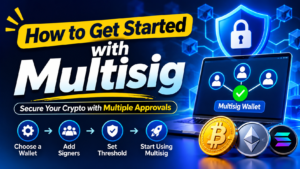
Before investing large amounts in any multi signature crypto wallet, it is wise to try out recovery. Follow these steps:
- Establish a budget and goal. Choose the degree to which you will be protected and to which you will seek assistance.
- Choose a model. Choose DIY, collaborative or an institutional provider.
- Buy hardware directly. Ensure devices are ordered directly from the manufacturer or authorised reseller to minimise tampering potential.
- Generate each key by itself. Make all of the keys on individual key fobs. Do not enter a phrase into or photograph a connected computer.
- Send a small test amount. Check if you can get and spend before you add more.
- Back up everything. Keep seed phrases offline and in different places. Back up the wallet configuration.
- Practice recovery. Assume one of the keys is missing and recreate access using the remainder.
- Plan for inheritance. Make clear directions for a trusted individual or Lawyer. Avoid putting your seed phrases in your will.
- Review yearly. Verify devices, firmware, contact information and subscription status.
Everyday errors to steer clear of:
Having all keys in one location. One fire or theft sets the rest on fire.
Doing without recovery test. People find out that backups don’t work unless there is a disaster.
- Failure to remove the configuration file. May require rebuilding the wallet.
Purchase of used or unsealed equipment. Your keys can be broken if they are tampered with.
Keeping seed phrases electronically. Easy targets include screenshots, cloud notes and email drafts.
- Using too many or too few keys. Too complicated of a quorum can exclude you. Using a 1-of-2 setup provides little protection.
The trustworthiness of links in emails. Phishing sites look like wallet apps. Add bookmarks or official app stores.
- Ignoring taxes. Maintain records of all purchases, sales and transfers.
US considerations: taxes, reporting and protections
The IRS in the U.S. considers digital assets property not currency. When you sell, exchange or spend cryptocurrencies, the resulting gain or loss may be a taxable event and must be reported on Form 8949 and your tax return. Guidance is subject to change; check with the IRS or a tax professional for the latest information.
These are the key takeaways for multisig users:
- Form 1099-DA. Digital asset sales reported to the IRS on this form are made by custodial brokers, like exchanges. Brokers report gross proceeds for sales in 2025. The covered assets must be acquired in 2026 or after, and maintained with a broker
- Self-custody is different. A wallet where you have control of it is typically not a broker, so you might not get a form. You will still be responsible for reporting taxable activity.
Generally, transferring funds from your own wallets to the others is not a sale. Record any dates, amounts, and addresses, anyway.
- Cost basis. Keep a record of the amount spent for each transaction. Help is available in the form of tax software or a CPA.
- IRAs. A qualified custodian will be needed to hold crypto in a retirement account. Unchained, for instance, provides a Bitcoin IRA in such a way. Be sure to review IRS guidelines and provider conditions to begin with.
- Not covered by FDIC or SIPC. These safeguards are not enforced on self-custodial crypto.
- Estate planning. Consult an attorney with regard to how to document access for heirs without revealing your keys.
Business accounting rules can be different from state tax rules. Check the information with authoritative sources and a professional who is licensed.
Frequently asked questions
Which is the best and easiest to use multisig wallet?
If you’re new to Bitcoin, you’ll typically get the best start on a guided service like Unchained or Casa. They offer set up assistance and recovery. Before selecting, you should check out fees, supported hardware, and recovery options.
What is the value of multisig wallet?
There are 100’s of dollars worth of costs to consider which range from free to thousands of dollars annually. Open-source applications like Sparrow, Electrum and Safe are free, though you have to pay for things like hardware and network fees. Check current rates, as Casa charges Standard for $250 a year, and Premium for $2,100 a year.
What is the difference between multisig and a single hardware wallet?
Generally speaking, multisig is more secure as it won’t be vulnerable to a single point of failure, but it also tends to be more difficult to operate. One hardware wallet is easy and still superb, with a good backup. Multisig is ideal for larger amounts of money, multi-user wallets, and long-term storage.
What happens if I lose one key?
When the setup is 2-of-3, the other two keys are still able to sign. The lost wallet should be retired and money should be transferred to a new wallet using new keys. The quicker you act, the less of a risk an attacker has of getting a second key.
Is multisig wallet legal in USA?
In most cases, having cryptocurrencies in a self-custody multisig wallet is legal and won’t affect your tax obligations. The rules governing crypto businesses and crypto providers may alter, therefore make sure to verify the official sources. If running a business or holding funds for others, think about legal advice.
Can I move my crypto to a multisig wallet and not pay taxes?
Fund transfers between wallets you own are not considered to be a sale. They can be sold, traded or used later. Maintain good records of dates, amounts and cost basis and consult a tax expert.
Do you allow multisig in a retirement account?
Sometimes. There are some providers that provide Bitcoin IRAs, which have a qualified custodian to take care of the IRS requirements and the assets are stored in a multisig vault. Requirements, costs, and conditions are subject to change, please check provider’s conditions, and consult a tax professional.
What would happen if the wallet company went out of business?
Select providers that have open standards and release recovery tools. For instance, a sovereign recovery tool is published by Casa. Test recovery ahead of time, and protect wallet configuration files and backups.
Final takeaway
Multisig is designed to have multiple approvals instead of one. For the best multi signature crypto wallets, you will need to find the right wallet that is both secure and user-friendly, while also being cost-effective. Bitcoin users can opt-in for the guided services or for the DIY tools and Ethereum users generally tend to opt-in for Safe.
Consider using a few to begin with, test recovery, and use keys in different places. Maintain tax records; check with the IRS and qualified professional on important details. Multisig is security, but not returns or risk mitigation.