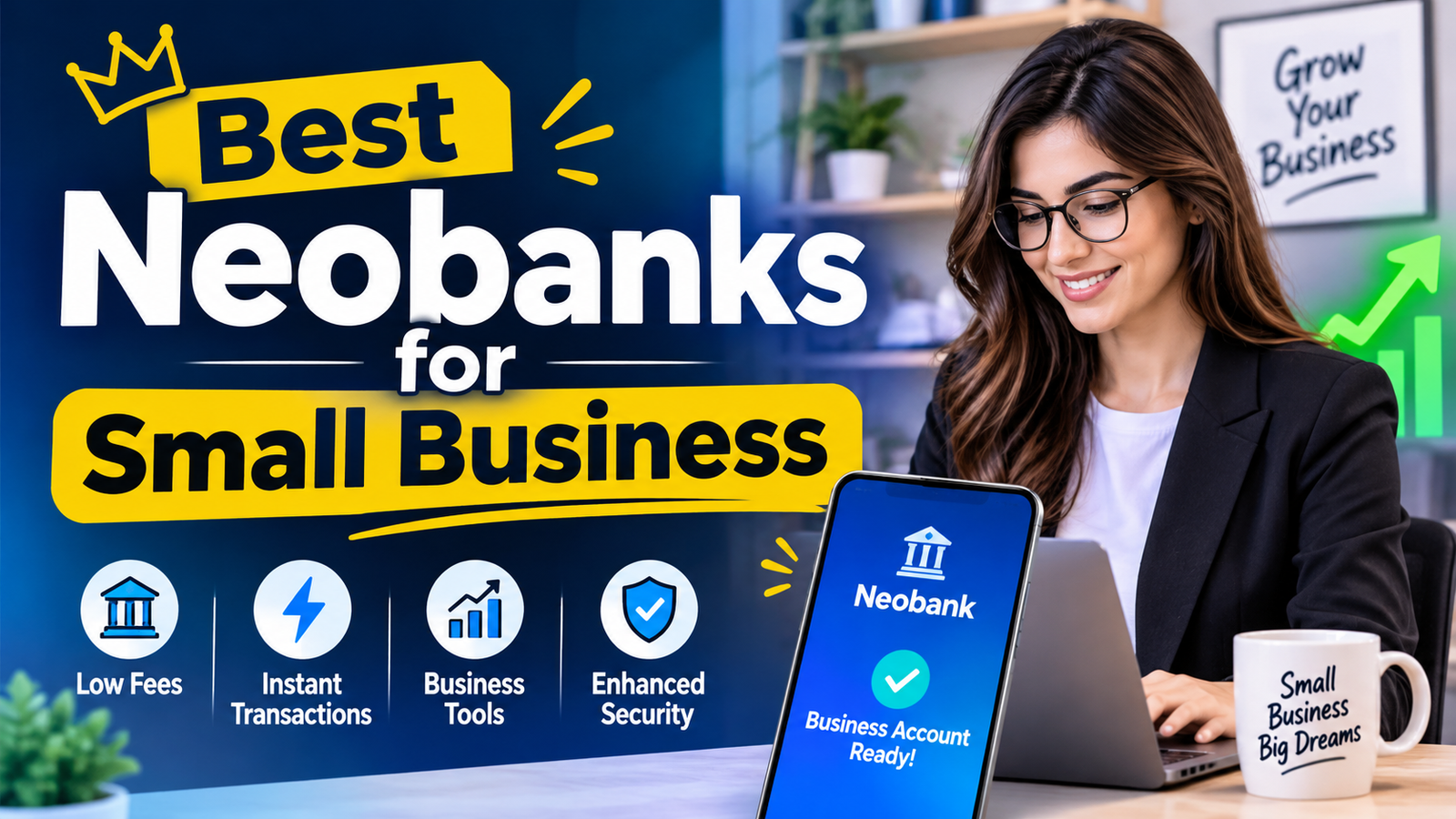
Typically, the best neobook for small business is a small business checking account that is easy to bookkeeping integrate, has robust FDIC protection, and provides the payment tools you use weekly, all for a low fee — and without having to register with an online bank. There is not one provider that’s right for everyone. It is dependent on the deposit practices, quantity of funds transferred and credit or cash handling requirements.
How is this significant? Business banking fees combine in the form of monthly fees, wire charges, and limits on cash deposits. The wrong fit could result in unexpected charges or a payment being stuck at an inconvenient time. A good fit saves you time and time saves you tax time books!
This article clarifies what neobanks are, what is important and how to pick one. It also includes risks, a worked example and common mistakes. It’s information, not financial advice.
In the world of business banking, what is the meaning of “neobook”?
Neobanking is a financial technology (fintech) firm that provides online banking services, typically through a mobile application. Not many of them are chartered banks. They work with a licensed US bank that is insured by the FDIC and holds the deposits. This is the type of provider people are looking for when they’re searching for the best neobook for small business.
These are the terms that you will encounter:
- Neobank: A bank that offers checking and other services over the internet.
- Partner bank: Your bank that gets your funds behind the scenes and is FDIC-insured.
- FDIC insurance: Federal insurance of deposits through the FDIC up to $250,000 per depositor per bank per category of ownership.
- Sweep network: A participation program with multiple banks that distributes large balance amounts among banks to improve insurance.
Neobanks have a few differences from conventional banks:
- They don’t have branches, so you’re in control online.
- Opening accounts can be quicker.
- The fees tend to be lower, but not always.
- Integrations with software generally is a key component.
There are also benefits to traditional banks including face-to-face service, cash handling and long lending histories. There are many owners who use both.
How Does a Neobank Work for a Small Business?
The concept behind a neobank is to integrate a cutting-edge software platform with a licensed partner bank. You use the app. The partner bank maintains the funds and complies with regulatory requirements.
Typical process:
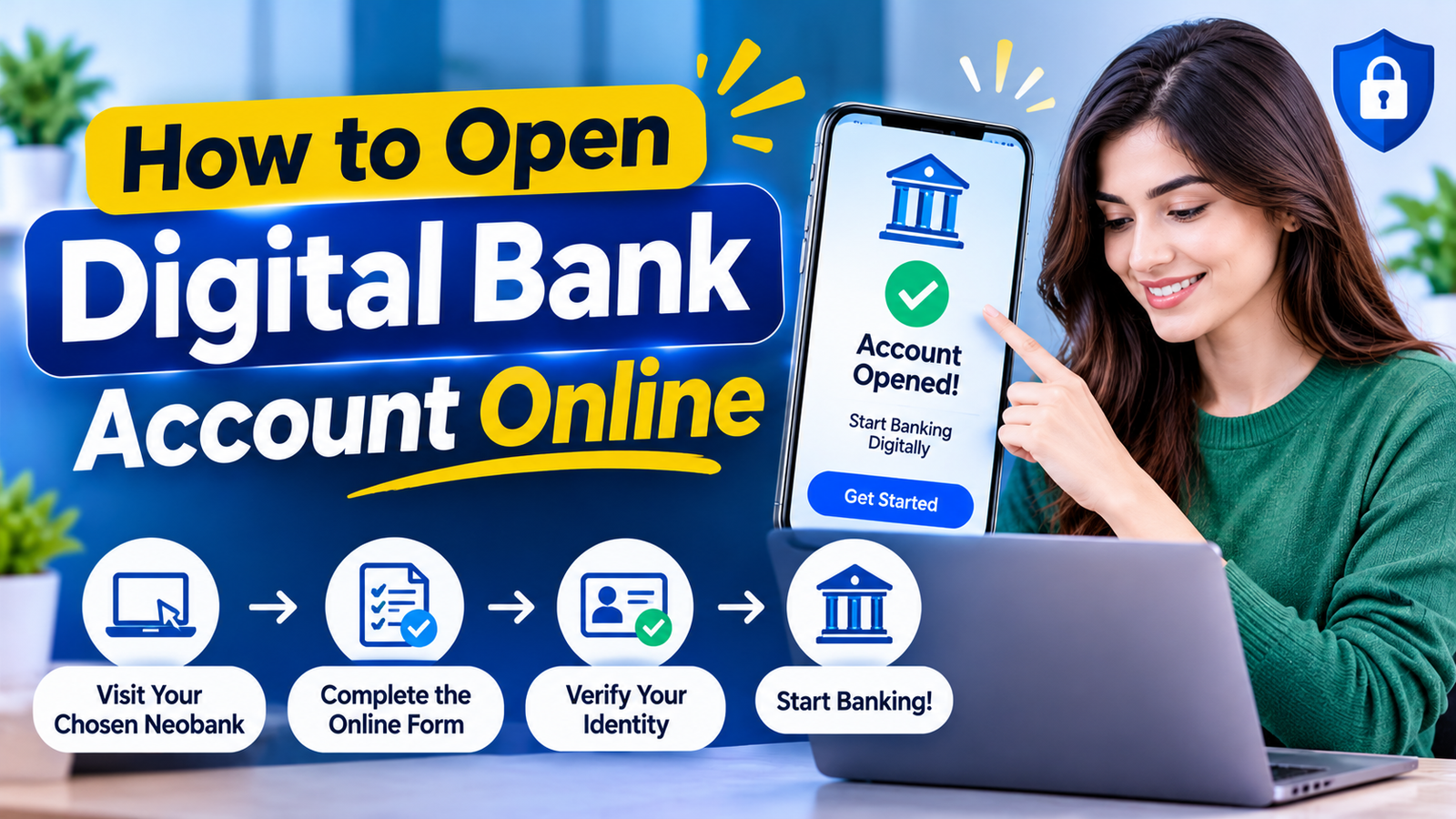
- You apply online. You provide information about your business: Legal Name, Entity Type, and EIN.
- The provider verifies your identity. The rules in the United States require financial institutions to establish the owner and controller of a business entity. Be prepared to submit ID and formation papers.
- Your account is opened in the partner bank. Account and routing numbers are provided.
- You join your tools together. Examples of common integrations include accounting software, payroll, and payment processors.
- Send and receive money; money transfers. Common are ACH transfers, wires, checks, and debit or virtual cards.
Features are dependent on the provider. Some neobanks provide high-yield savings, invoice, bill pay or corporate cards. Others concentrate on having low-cost checking account options with limited services.
One note: the bank partner may vary from time to time. Look at the provider’s disclosures to determine which bank has your money in it at this time.
What is the importance of having the right account?
The right business account impacts cash flow, bookkeeping, taxes and risk. Little slips add up over the course of a year.
Think about what is at stake:
- The fees include monthly charges, wire fees and overdraft fees, all of which diminish your margin.
- Slow deposit speed: Slow deposits can result in delayed payroll or vendor payment.
- Bookkeeping: Hours of your life or your accountant’s will be saved when you clean transaction feeds.
- Dedicated business account – helps you keep personal and business money separate. This separation makes clean records and for some entity types, it facilitates liability protection.
- Banking History: A history of banking can be important in the event you later apply for financing.
The IRS requires all records to be retained to back up the income and expenses reported on the return. That’s easier when you have a well-organized business account. Check existing record keeping regulations with the IRS or tax accountant.
Appropriate short answer: What to look for?
There are five objects to look for first:
- Low or no fees based on your usage.
- Obtain FDIC insurance – a named partner bank.
- Integrations with your accounting and payment tools.
- Understanding of the methods in which money is received, including ACH, wires, cards or checks.
- Responsive customer support.
All other is a bonus. The next section elaborates on each point.
There are a number of key factors to consider before choosing.
Fees and Pricing
The first thing you need to compare is fees. Don’t just consider the headline monthly rate.
Review these costs:
- Monthly maintenance fees
- Incoming_OUT, OUTgoing_WIRE fees
- ACH fees (including same-day ACH)
- Review the costs of a check-writing service and any other deposit costs.
- Cash deposit fees
- ATM fees
- Overdraft or returned item fees
Any additional users, cards or sub-accounts will have charges.
The fees for paid tiers and what they provide access to.The cost of paid tiers and what they offer.
There are many neobanks that have a basic level which is free, and a premium level that requires a charge. The free tier might be sufficient for the freelancer. A company that is on the upswing can require additional accounts, users, or higher limits with a paid plan. Prices change so be sure to check the provider’s website for the most up to date fee schedule.
FDIC Insurance and Safety
If an insured bank fails, the deposits are protected by FDIC insurance. It is not a protection against fraud losses, bad vendors or unauthorized transactions like many owners think. It also does not apply to investments, except in a few instances.
Check these points:
- Who has the responsibility for the deposits? Find the named partner bank.
- Pass-through coverage is clearly defined? The type of fintech account is covered by the FDIC as long as they maintain proper records at the partner bank.
- What are the boundaries? The maximum payout per depositor per insured bank per ownership classification is $250,000.
- Do you have a sweep program? Some providers offer multiple banks to cover multiple banks. That’s why it’s important to read the terms carefully, as they differ.
The FDIC releases guidance on deposit insurance and on fintech arrangements. Check any claims by a provider with its official materials.
Integrations and Bookkeeping
To a small business owner, time is money. Effective integrations minimize manual data entry.
Ask these questions:
- Does the account get synced up with QuickBooks, Xero or your accounting system?
- Are there any transactions that you can’t export cleanly?
- Is it integrated with payment providers such as Stripe or Square?
- Does it offer payroll solutions you may employ?
- Are there opportunities to tag/categorize transactions within the App?
Time savings, no matter how small, count. Better syncing is indeed worth the time if you have several hours to spend each month reconciling accounts.
Payments You Do Use
List your payment; how you earn it and how you spend it. Then compare the account with that list.
Common needs include:
- ACH transfers are set up by the client.Clients set up ACH transfers.
- For larger or overseas payments, wires will be used.
- Older customers will receive paper checks.
- Card payments via a processor
- Cash received as a result of face-to-face sale.
- Recurring payments for supplies to vendors.
One of the common pain points of neobanks is cash. Some allow cash deposits in limited amounts via retail partners and charges may apply. A traditional bank or credit union may be better if your business requires lots of cash.
Eligibility and Business Type
Not all providers are available to all businesses. Please check eligibility criteria prior to applying.
Points to check:
- Whether the provider will accept your business structure (LLC, sole proprietorship, S corporation, or C corporation)
- If they are willing to accept new businesses that have not been around long.
- Whether they cap the number of industry employees
- Whether they need a US address and ownership,
- Whether they are for nonprofits or just for-profit companies
Some banks may limit the use of direct banks for services to certain industries including cannabis, crypto, firearms and adult service providers. Please check providers’ policies before applying.

Cards, Credit, and Lending
Some neobanks provide business debit cards, corporate cards, or lines of credit. They can come in handy, but use them as stand-alone decisions.
Consider:
- What kind of cards are they, debit, credit, or charge?
- Do you have a personal guarantee?
- Are there rewards and what are they?
- Are there any interest rates or fees?
- Is it the provider or a partner that lends directly?
There is risk involved with credit products. If you enter into a personal guarantee, be careful of a late payment or balance, or you could be doing harm to your business and your personal credit. Be sure to carefully read the directions.
Customer Support
The key to supporting is when something goes wrong. Online-only banks may have email and chat support, and a few phone hours.
Check:
- Available support channels
- Typical response times
- If you need getting hold of someone for urgent matters
- How disputes and claims in relation to fraud are handled by the provider.
Recent customer experiences may help, but be wary of reviews. Stories and experiences are individual and may not be typical service.
The top US neobanks to explore:
There are a handful of neobanks and fintech firms that cater to US small businesses. The following is a list to get started on research. It is not a rating or an recommendation and the content is subject to frequent changes.
- Mercury: Related to start-ups and Internet businesses. Famous for software-like tools and treasury functionalities.
- Relay: Recognised by several checking accounts and organisation more like a budget.
- Novo: Designed for freelancers and small businesses, featuring easy account and app integration.
- Bluevine: Business checking + credit products.
- Found: Designed for freelance and self-employed people and containing tax-related tools.
- Lili: Geared towards freelancers and self-employed individuals.
- Brex and Rho: Typically used by larger companies with a spend management function who have been venture-backed.
Product lines, partner banks and fees change. Before choosing, make sure to review the disclosures, current fee schedule, and website of each provider. When applying also check with partner bank where your deposits are being held.
Advantages and possible disadvantages.
Benefits
- Reduce monthly charges: Most of the accounts do not have monthly charges on the basic tier.
- Quick and easy application process: Online applications may be faster than visiting a branch.
- Common modern tools include virtual cards, user permissions and real-time notifications.
- Time is saved with direct syncing of accounting integrations.
- Several sub-accounts: You can split your money for taxes, payroll or projects.
- Money management from afar: You can control money from any location.
Potential Risks
- Not a bank, per se: Most neobanks use a partner bank. If the relationship with that company concludes, your account might be moved.
- Restricted cash services: It may be challenging or expensive to deposit cash.
- Freeze on account: Compliance checks may freeze accounts. Maintain alternate access to cash.
- Limited support: The phone support may be limited.
- Product changes: features and fees are subject to change with notice.
- Misunderstandings about insurance: FDIC limits and conditions. Does not provide coverage for all types of losses.
- Relationship borrowing: Some instances may exist where a relationship loan with a local bank is easier to obtain.
A good strategy is to not store all the dollars in one collection. Some owners have a backup account in a second bank.
Example: A Hypothetical Bakery.
This example is worked with fictional numbers. It’s just an illustration, not a recommendation or prediction.
Suppose it’s a small online bakery in Ohio. It’s an LLC that has the following monthly activity:
- $18,000 deposits via a payment processor (cards and ACH)
- 25 payments sent to merchandise suppliers via ACH
- 2 outgoing domestic wires
- 1 paper check deposit
- Some cash from farmers market sales, approximately $400 per month
- A team member who requires card access and another member of the team.
What is this depicting?
- The most economical option on the paper is not necessarily the best option.
- Financial requirements can change the equation.
- Two accounts can help minimize risk and fill in the gaps.
- The math should be rerun with actual fee schedules.
This may not apply to you. Utilize actual numbers from statements.
Choosing and opening an account step by step:
Follow this process to pick an account:
- List your needs. List your types of deposits, how you pay, how much you pay each month and your team size.
- Pull recent statements. Count the wires, checks, cash deposits, and card transactions for the previous three months.
- Identify 2 or 3 providers. Select according to the needs, not only for advertising.
- Read the fee schedule and account agreement. Try to find limits, holds and closure terms.
- Look in the partner bank. Ask for information about the FDIC’s insurance and its coverage.
- Check integrations. Ensure there is a smooth integration of accounting and payment widgets.
- Gather documents. You generally will need to provide your EIN, formation paperwork, identification, and ownership information.
- Apply online. Be careful with your answers and ensure you have entered accurate information.
- Test on a small transfer. Try a small movement first to test that it is functioning.
- Keep a backup. Have a second account for resilience.
Common documents requested are:
- IRS confirmation of an Employer Identification Number (EIN)
- Articles of organization or incorporation
- Operating agreement (if applicable)
- Government-issued ID card for owners.
- Evidence of company address
Under U.S. regulations, financial institutions are required to confirm business owners. The beneficial ownership reporting requirements have also evolved over the years and may be different from those reported earlier – verify current requirements with FinCEN or a qualified professional.
Common Mistakes to Avoid
There are numerous mistakes that many owners make. Avoid these:
- Taking the monthly fee as the sole criterion. In addition to the low base price, the cost of wiring, cash and card payments can become significant.
- Not taking the partner bank into consideration. Know who you are lending to.
- In making this assumption, we are assuming that all balances are fully insured. If the balance is over the normal limits, it might be a large one.
- Working with a personal bank account. This makes bookkeeping difficult and might generate legal and tax problems.
- Combining all the money together. A payroll and vendor payment freeze can have a negative impact on the payroll process.
- Neglecting the details. Read the terms of holds, closures and dispute resolution.
- Failure to plan in advance for cash. Make a plan to put money to good use when you don’t need to.
- Not keeping business information up to date. Any changes of address and ownership should be reported as quickly as possible.
- Neglecting security. Employ robust passwords, multi-factor authentication and user access.
- Combining revenue with revenue of the government. If your provider allows you to, designate a sub account for taxes.
Security and Fraud Protection Basics
When performing online banking, the following security measures should be taken. Small businesses are often the victims of fraud.
Practical steps include:
- Enable multi-factor authentication for all users.
- Ensure the rights of each user are restricted to that individual’s needs.
- Limit spending on cards.
- Review transactions weekly.
- Beware of fake emails that might look like invoices.
- If you can, use virtual cards to pay for online subscriptions.
- Confirm payments over the telephone with a known number.
Inquire from each provider about how they deal with unauthorized transactions. Protections for business accounts can differ from consumer protections. Review the account agreement and know the obligations and timeframe for reporting problems.
These are tax and compliance considerations.
Banking decisions are related to taxes and compliance. Some of the US tips to keep in mind:
- Separate and keep business and personal finances.
- Keep bank records and statements according to IRS regulations.
- Organize transactions into easily defined categories for your return.
- Understand that your bank may give you tax forms for some of the interest from your bank.
- Know state requirements for your entity type.
Compliance and tax rules vary and are subject to your entity type and state. Always verify information with the IRS, your state agencies, or a licensed CPA/tax preparer.
Freuently Asked Questions
Which is the best neobank for a small business?
There’s no one right answer for everyone. The optimal option will depend on your comfort level, payment options, integrations and eligibility. Review the history of transactions for two or three providers and confirm that the providers currently charge the same fee and accept the same banks for applications.
Is the business safe with neobanks?
Neobanks can rest easy if the banking partner is an FDIC-insured institution and the neobanks employ robust security measures. Habits also play a part in safety. Check the partner bank, know the insurance limits and employ multi-factor authentication.
Does the money in my neobank’s account qualify for FDIC insurance?
Generally, yes, provided that the neobank maintains records appropriately and that it maintains deposits at an FDIC-insured partner bank. This limit is typically $250,000 per depositor, per insured bank, per ownership category. Review the provider’s disclosures and the FDIC’s official guidance to understand coverage.
Is there any room for cash deposits in a neobank?
Some may be available, though not necessarily and can incur charges. When your business receives significant amounts of cash, check out the deposit options first. If your business needs a lot of cash, it might be more suitable to use a traditional bank or credit union.
Is there a requirement to have an EIN to open a business account?
Generally, businesses need an EIN (e.g., LLCs and corporations). For some sole proprietors, a Social Security number will be acceptable, depending on the policies of the company. An EIN can be obtained free of charge from the IRS; check the official IRS website.
Is it possible to combine use of a neobank with a “regular” bank?
Yes. Some owners employ a neobank for online payment and software solutions, but a traditional bank for cash, loans, or backup. By using 2 institutions, there is a lower risk if one is frozen or delayed.
What is the time frame of opening a neobank account?
Online applications can be quicker than branch applications. The timing varies depending on verification and document quality as well as the provider’s review. Depending on the extra required documents, some of the applicants may be approved in a short time while others may be delayed.
Will a neobank help me get a business loan?
Some neobanks provide credit products, or work with lenders. Others do not do any lending. Be sure to evaluate the terms which involve the interest rate, fees, and personal guarantee requirements, as well as options offered by banks, credit unions and the Small Business Administration (SBA).
Final Takeaway
The ideal neobook for small business is the account that aligns with the way your company makes, spends and reports money. Use your actual transaction history. Shop around for fees, FDIC insurance, integrations, and assistance. Run a few tests on the account before transferring money to it.
Neobanks can provide reduced fees and valuable software. They also have restrictions, particularly in terms of cash and customer service. It is very important to have a backup account and read the fine print to minimize risk.
The rates, fees and product features are subject to change. Check for the latest information on every provider’s website and from trusted sources such as the FDIC, IRS and the Small Business Administration. To get specific advice, consult your licensed CPA, attorney or financial professional.
One thought on “Best Neobanks for Small Business in 2026: Top Digital Banking Options”