
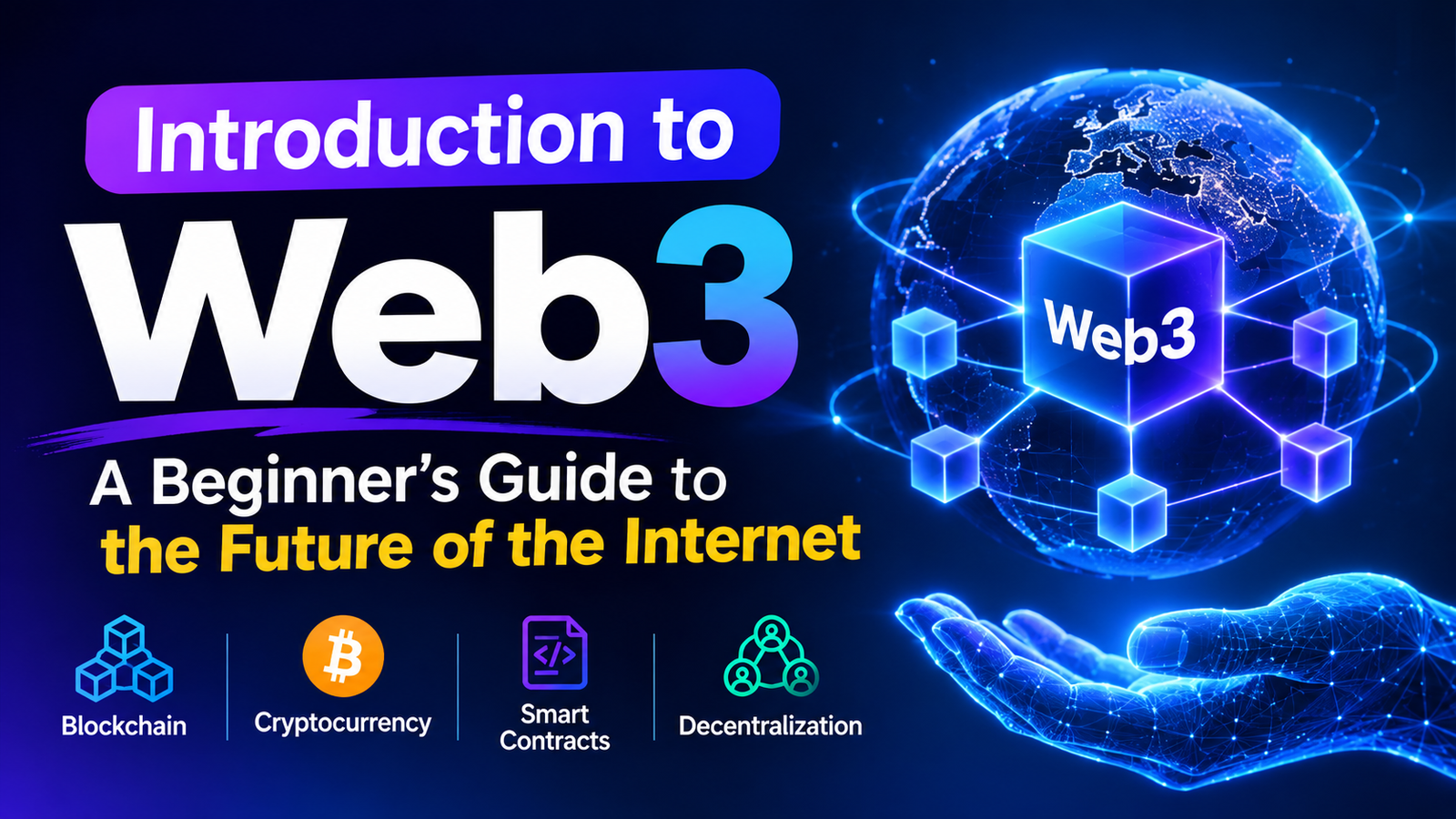
“Web3” refers to an internet model in which the end-user owns stakes in the platform itself using blockchain technology instead of being dependent on big corporations that provide everything. No logging in with the company’s credentials, but connecting a wallet. No company owning your data and funds, but smart contracts and a public blockchain stating ownership.
This may sound very theoretical, but this guide will try to remain down to earth. Here you will learn about the concept of web3, how it operates, where it intersects with finance, and what specific US-related concerns one should take into account. Web3 101 for the fiscally savvy, not for the developers.
The important disclaimer: web3 is a relatively new and quite volatile area. There are frequent fluctuations in value, widespread fraud, and uncertain US regulations. No personal financial, tax, and legal advice in this guide.
Quick Overview
- Web3 refers to internet services which are built on the blockchain technology and allow individuals to manage their assets and identity via their personal wallets.
- The topic has significance for the financial industry since it covers cryptocurrency, stablecoins, tokenized assets, and decentralized finance (DeFi).
- Risks include no FDIC insurance for crypto, sharp drops in value, and numerous scams.
- Legal regulations in the US are strict. The IRS considers crypto assets as property and the SEC and CFTC regulate different segments of the market.
- Do your research, start small, and never risk more than you can afford to lose.
Definition of Web3
Web3 is the next iteration of the internet created on blockchain technologies where users will be able to own their assets and use online services without the help of any central corporation. The term “proposed” is very important as Web3 is still under development and there are controversies concerning its success.
For better understanding, you should compare three stages of development of the Internet.
Web1, Web2, and Web3 Compared
- Web1 (around the ’90s to the early 2000s): Read only websites. You could view pages but not make them.
- Web2 (around the mid-2000s until now): Social media, streaming, and apps. You make the content, but the platform owns your account, data, and even the rules.
- Web3 (developing): Blockchain applications. You may possess assets and credentials yourself in a wallet, and some rules are governed by open-source software.
The computer scientist Gavin Wood is believed to have coined the phrase “Web3” in about 2014, while referring to Ethereum. In time, the phrase has become used to describe many concepts. There are both technological and marketing aspects involved.
The Fundamental Concept: Ownership
In today’s world, video games providers have the right to remove your account and all the data stored in it. In social media, the company can modify its policies suddenly. However, in a web3 world, there would be a possibility for you to store your item or token in your personal wallet, and no single provider can remove it in principle.
However, there is always a downside to ownership. In case you lose your wallet access keys, they cannot be restored via any helpdesk.
Web3: How It Works
The working mechanism of web3 involves the use of a distributed ledger technology, called a blockchain, along with digital wallets and self-executing programs known as smart contracts that enable two strangers to trade value based on a set of pre-agreed rules.
Let’s take a look at the components used in this process.
Step 1: The Blockchain Documents the Transactions
The blockchain is an example of a database which is replicated on thousands of computers. The transactions are bundled into blocks and linked sequentially. Once the majority of the nodes confirm that a block is indeed valid, it becomes impossible to modify.
Bitcoin was the first major blockchain technology invented in 2009. Ethereum, another technology invented in 2015, enabled running of smart contracts on the blockchain. There are many other blockchain technologies currently existing.
Step 2: Consensus Makes Sure the Network is Trustworthy
For a blockchain to know what transactions are legit, there must be some kind of consensus.
Proof of work: Computers try to solve math problems. It’s what Bitcoin does.
Proof of stake: People tie up their coins as collateral for validating transactions. This is what Ethereum does now.
It’s not necessary to know all the technical ins and outs. What’s important to remember is that it’s the network, and not the company, who checks the records.
Step 3: Wallets Contain Your Access
A crypto wallet is software or a physical device that stores the private keys confirming you are the owner of certain crypto assets. One may imagine the private key as an extremely powerful password, which will enable the owner to take control of one’s crypto assets.
Two types of wallets exist:
- Custodial wallets. In this case, a third party, such as a US-based crypto exchange, keeps the keys on behalf of the users.
- Self-custody wallets. The user owns the keys; he/she has full control and responsibility in case of any problems.
Step 4: Smart Contracts
A smart contract is an application that resides on the blockchain and automatically executes upon meeting certain conditions. The contract would release a payment once both parties have deposited their payments.
Most web3 financial applications use smart contracts. However, they pose a risk since any coding errors can lead to hackers being able to drain funds. Transactions are mostly irreversible.
Step 5: Tokens Represent Value or Rights
Tokens are digital representations that are stored on a blockchain. These include:
- Cryptocurrencies: For example, bitcoin and ether. Can be used as money or as fuel for the network.
- Stablecoins: Tokens that are tied to the price of currencies like the US dollar.
- NFTs (non-fungible tokens): Tokens that are connected to unique digital objects, like artwork or tickets.
- Governance tokens: Tokens that allow holders to vote on the decision-making process within a project.
Step 6: Decentralized Applications Put It All Together
Applications that use these technologies are known as dApps. DApps might enable you to do things like trading tokens, borrowing assets, or engaging in an online community. Instead of using a username and password, you typically connect your wallet.
Why Does Web3 Matter to Finance?
Web3 is important to finance due to its ability to provide an alternative means of transferring, storing, and tracking value, and some big financial institutions are exploring Web3. Whether or not you purchase any cryptocurrencies, Web3 could impact payment systems, settlement processes, and even ownership of assets.
Faster Transactions and Global Accessibility
The old-school systems include card networks and wires; both use intermediaries. Blockchain transactions can be settled within minutes, any time, anywhere around the globe. It is quite good for international transactions, although high fees and volatility may neutralize the advantages.
Decentralized Finance (DeFi)
DeFi is lending, borrowing, and trading services provided not by the banks and brokers but smart contracts. A user can put tokens on a lending protocol and receive variable interest. The rates can be changed instantly, and there is no deposit insurance.
Tokenization of Real World Assets
Tokenization is an issuance of a blockchain-based digital representation of a traditional asset (a share in a money market fund or Treasury security). Many big US asset managers and financial institutions have been exploring or issuing tokenized assets. Information changes quickly, so you need to find the latest information on the company’s website.

Policy Issues Emerging from Web3
The third generation of the web raises many policy questions as well. If there is no single entity behind the product, how is investor protection to be achieved? In case of hacking incidents, what will happen?
Key Factors to Consider Before Using Web3
If you are exploring this space, consider these factors first.
Your Goal
Consider what you would like to achieve with cryptocurrencies. Education, remittances, investments, and building a company involve different types of risks and instruments.
Custody and Security
Choose how you would like to keep your keys safe. Using a regulated US-based cryptocurrency exchange could be more convenient for new users. Self-custody allows for independence but also implies backing up the recovery phrase properly.
Regulation and Platform Status
Consider the registration of the platform before using it in the USA when necessary. For instance, businesses transmitting money should be registered by FinCEN and have necessary permits from the states. Being compliant on the website does not mean that it is true.
Liquidity and Volatility
While some tokens have large volume, others barely have any at all. Liquidity might be a problem. Prices change a few percentage points per day and some of the assets lost their value in days.
Fees
There are exchange fees, network (or “gas”) fees, spreads, and withdrawal fees, among others. Fees might increase during periods of network congestion.
Taxes
The IRS considers virtual currencies to be property. The sale, transfer, or use of these currencies will lead to taxation. More on this below.
Advantages and Possible Drawbacks
A more nuanced perspective will help you to avoid exaggeration in any direction.
Possible Advantages
User Control: Self-custody reduces reliance on one particular firm.
Transparency: Transactions are visible for everyone on public blockchain, though users are mostly pseudonymous.
Programmability: Smart contracts enable automatic enforcement of agreements and payments.
Accessibility: Access to such tools is possible through internet access, without an account in the conventional sense.
Innovation: Experiments in tokenization and digital payments can result in some interesting products.
Market fluctuations: Prices may fall significantly, but previous performance doesn’t guarantee future outcomes.
No deposit insurance: Cryptocurrency on an exchange or in your wallet is not FDIC-insured. Similarly, your losses due to a reduction in the price of cryptocurrencies are not covered by SIPC protection of your brokerage account.
Fraud and scams: There are phishing attacks, giveaway scams, rug pulls, and impersonation scams.
Smart contracts vulnerabilities: Coding issues and hacks resulted in significant losses for the whole sector.
Transactions’ irreversibility: Once you send money to a wrong address, you can’t reverse it.
Unclear regulatory framework: Legislation changes are occurring, and the legality of a certain project may vary.
Difficulties: You may easily make a mistake, especially being a beginner.
Consumer Alerts from FTC and SEC warn people about cryptocurrency scams. Checking them out before anything else is a good idea.
US Rules and Considerations
US readers should understand that no single agency oversees all of web3. Several agencies play a role, depending on the activity.
Tax Issues
According to the IRS, virtual currency is property. In the Form 1040 filing, the IRS asks taxpayers if they have bought, sold, traded, or otherwise disposed of digital currencies during the reporting period. Brokers’ reporting requirements, which include new reports like Form 1099-DA, are implemented gradually, so make sure what your requirements are depending on your tax period.
In general, any sales of cryptocurrencies for more than its purchase price may result in capital gains. Receiving cryptocurrencies as payment or as rewards may be considered income. Keep track of the dates, quantities, and prices of transactions. Consider consulting a tax expert.
Regulation under Securities and Commodities Laws
The SEC controls securities. There have been some cases where certain tokens and offerings were considered securities, as well as some commodities or other types of investments. The CFTC is authorized over certain commodity derivative instruments and has claimed to have authority over some types of digital assets. It has remained unclear where exactly the line is.
Money Transmitter and Anti-Money Laundering (AML)
The FinCEN of the US Treasury regulates money transmission and AML for crypto businesses. This is why US-based cryptocurrency exchanges require you to verify your identity (KYC, “know your customer”).
Stablecoin Laws
Legislation has been proposed or enacted concerning dollar-denominated stablecoins. Since laws are continually changing, always confirm the most recent information about regulations promulgated by the Department of the Treasury, Federal Reserve, and other authorities prior to using a stablecoin.
State Regulations
Some states have laws regulating money transmitters or cryptocurrency operations. Each state has different requirements, so a particular service can be permitted in one state but not in another.
Important: Regulatory laws, guidance for taxation, and enforcement priorities are constantly changing. Verify any current information with official authorities including the IRS, SEC, CFTC, FinCEN, and your state regulator.
Example: A Sample Scenario for a First-Time US User
The below example is hypothetical. Numbers provided here are purely for educational purposes and do not constitute a recommendation or forecast.
Jordan, 32 years old, Ohio-based marketing manager, has an emergency fund of 3 months, participates in 401(k) program, and would like to learn about web3 with minimal risk.
Sample Jordan’s plan:
- Jordan sets up a learning budget of $200, which is the amount of money that Jordan can lose entirely.
- Jordan creates an account at an exchange registered in the US and passes KYC process.
- Jordan invests $100 into the major cryptocurrency and keeps another $100 as cash for fees and future learning.
- Jordan activates two-factor authentication via an authenticator app, not SMS.
- Jordan tracks all dates and prices of purchases in an Excel sheet.
What could happen:
- A gain of 20% means the asset is now worth $120. This means there is a $20 gain to be taxed.
- A loss of 40% means the asset is now worth $60. Jordan has lost $40 without insurance for the loss.
Jordan does not take any chances with the emergency fund, retirement savings, or loans. All this is being done to achieve educational objectives, not financial ones.
The above example illustrates the conservative way of dealing with Bitcoin; small amounts, regulated platform, good security, and documentation are used here. Another person with other objectives may do otherwise.
How to Start With Web3
Use the following if you wish to learn more.
- First, get educated. Learn about Web3 from the SEC, CFTC, FTC, and Investor.gov before purchasing any investments.
- Define your objective and limits. Set your own level on the potential loss, if there is any.
- Evaluate your foundation. Pay your debts that have higher interest and create an emergency fund before taking risks.
- Select a credible and licensed platform in the US. Check its registration, fees, and reputation by yourself.
- Secure your account. Use unique passwords, password manager, and two-factor authentication.
- Begin with a trial transaction to better understand the fees and confirmations.
- Think about getting a wallet. You could gain some education, but always write down your recovery phrase and don’t show anyone.
- Create a record of all transactions for your personal accounting at the end of the year.
If you wish not to get involved directly in cryptocurrencies, you still can follow the market with news and analysis without buying anything. Indirectly, some US investors get exposed to web3 via investment instruments. They have their own risks and costs, so always check the prospectus.
Common Mistakes to Avoid
- Relying on hype. Sudden increase in value or celebrity promotion is not research.
- Using money you depend on. Your rent, emergency fund, and your savings for retirement should remain untouched.
- Disclosing your recovery phrase. Legitimate companies never ask for that.
- Opening links. Fake websites and even social media posts often replicate genuine businesses.
- Overlooking fees. Small trades suffer from big fees on network and trading.
- Promises of guaranteed return. Guaranteed profits and risk-free return are warning signs.
- Neglecting tax implications. Most people consider taxation after they made a huge win.
- Bypassing terms and conditions. You should always read them, especially when it comes to staking, lending, or yield farming.
- Using unregistered platforms. Ensure that the platform operates lawfully for US users.
- Holding all assets in one basket.
Frequently Asked Questions
What is web3 in simpler terms?
Web3 is the blockchain-based internet where the users have ownership of their assets and identities via their personal wallet. Rather than one single organization owning the accounts and records, it uses shared networks to keep them. It is a developing concept with people disagreeing on its limits.
Is web3 equal to crypto?
Not exactly. Crypto is just one aspect of web3. Apart from cryptocurrency, web3 comprises wallets, smart contracts, NFTs, DApps, and even the network itself. Often, crypto functions as the payment and reward system for it.
Is web3 legal in the United States?
A lot of actions related to web3 are allowed in the US, provided they are compliant with the relevant laws. These may include securities, taxation, anti-money laundering laws, and other relevant state regulations. As the regulatory framework for web3 is evolving rapidly, check with the relevant bodies or a lawyer for the latest laws.
What makes web3 different from web2?
In web2 technologies like social media and video streaming apps, the ownership of accounts and information belongs to the platform. The idea behind web3 is to enable direct asset ownership and credentialing for users. However, this requires users to take greater responsibility for themselves.
Is web3 suitable for beginners?
For newcomers, web3 can be very dangerous. Asset value fluctuates a lot, frauds are frequent, and most transactions are irreversible. It is better to begin by learning about web3 and starting with small sums you are ready to lose on a reputable platform with high security measures.
Are cryptocurrency assets insured by FDIC?
No. The FDIC insures bank accounts, but not the crypto-assets. If an exchange goes bankrupt or a user loses access to their wallet, then there is no guarantee of getting their funds back. You need to know what kind of security measures are offered by any service.
How are web3 earnings taxed in the USA?
According to the IRS, digital assets are property. Any sale, trade or expenditure of digital assets is subject to capital gain or loss, whereas receiving crypto assets as payment or reward may fall under income taxation rules.
Final Takeaway
Web3 uses blockchain networks, wallets, and smart contracts to create a new model for digital asset ownership and transfer. For our audience interested in financial matters, Web3 includes cryptocurrencies, stable coins, tokenized assets, and DeFi. The possible advantages of Web3 include user sovereignty, transparency, and programmability.
The risks associated with it include volatility, frauds, lack of deposit insurance, irreversibility, and changes in US regulations. A responsible introduction into the world of Web3 should begin with education, goal setting, a loss ceiling, and reliable official sources. To proceed, make sure you understand the current regulations by IRS, SEC, CFTC, FinCEN, and your state regulatory body, and consider speaking to a certified professional.